
New to Korean Skincare? Here’s Everything You Need to Know Before You Start

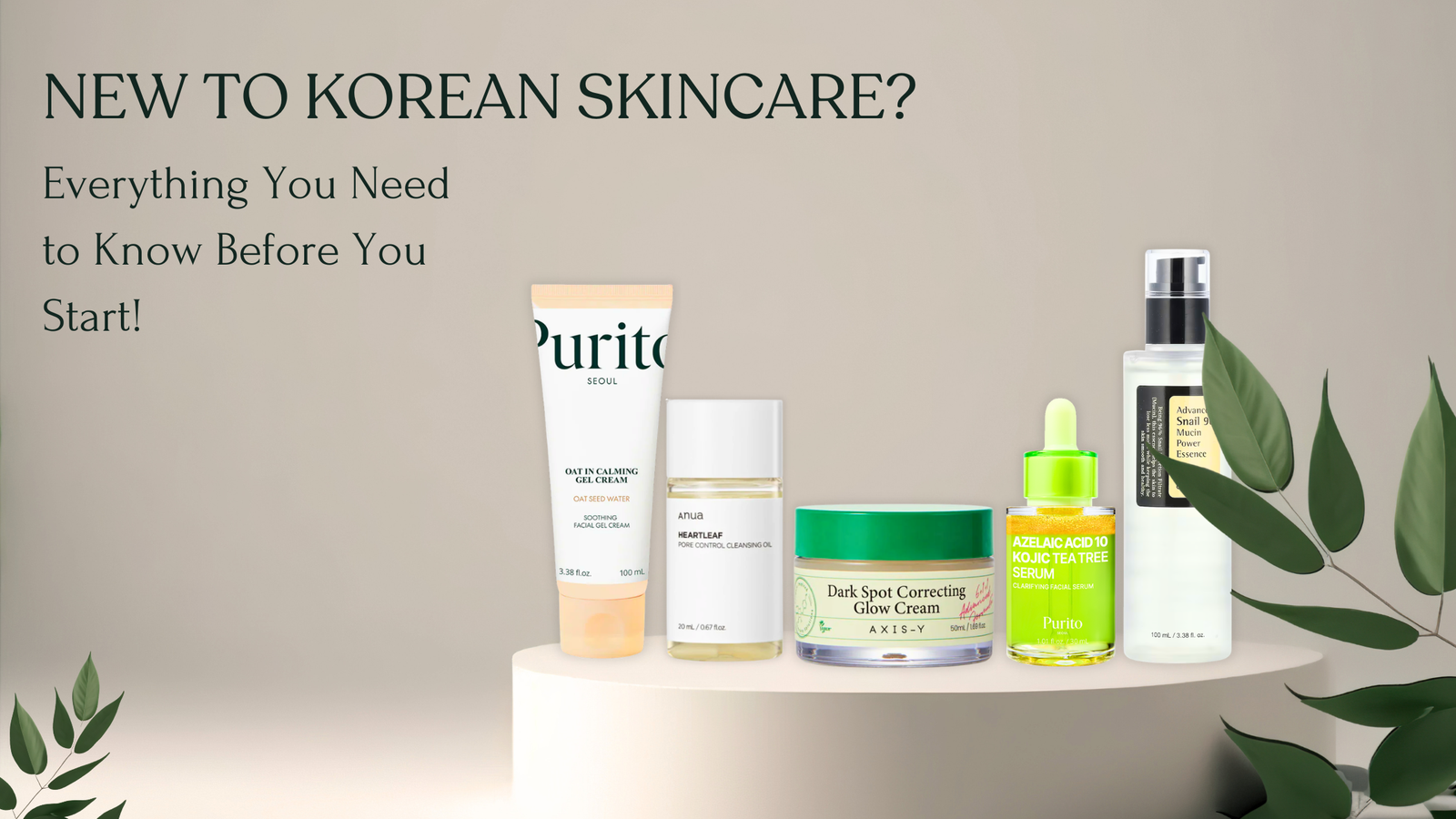
If you’ve recently started looking into Korean skincare, you’ve probably noticed one thing very quickly:
“There are a lot of Korean products”.
Cleansers, toners, essences, serums, ampoules, moisturizers, sleeping masks, sunscreen, and then there are all the different ingredients and Korean brands to choose from. It can be exciting, but honestly, it can also be a little confusing. You might be wondering:
Do I really need all of these products?
Which one should I use first?
What if I have acne?
How do I know what will actually suit my skin?
Don’t worry. You don’t need a 10-step routine to get started with Korean skincare. The most important thing is understanding your skin, your concerns, and what your skin actually needs. So, if you’re completely new to K-beauty, let’s start from the beginning.
What Is Korean Skincare?
Korean skincare, often called K-beauty, refers to skincare products and routines that come from South Korea. But K-beauty isn’t just about using Korean brands. There’s also a general approach behind it: taking care of your skin consistently instead of waiting until there’s a problem.
You’ll often see Korean skincare routines focus on things like hydration, gentle cleansing, skin barrier care, and daily sun protection.
The idea is pretty simple:
Instead of constantly trying to fix your skin with strong products, you build healthy habits and give your skin the care it needs over time. And that’s one of the reasons Korean skincare has become so popular around the world.
Do You Really Need a 10-Step Korean Skincare Routine?
This is probably one of the first things people ask when they discover K-beauty.
The short answer?
No.
You don’t need ten products.
In fact, if you’re just starting out, buying a large number of products at once can make things harder. Imagine buying five new serums, two toners, and a new cleanser all on the same day. If your skin suddenly becomes irritated, how will you know which product caused it?
Starting simply makes much more sense.
A basic routine can be as simple as:
Morning:
- Gentle cleanser
- Moisturizer
- Sunscreen
Night:
- Cleanser
- Moisturizer
That’s enough to begin with. Once your skin is comfortable with these basics, you can consider adding products for specific concerns.
The Most Important Step: Know Your Skin Type
Before buying skincare, take a little time to understand your skin.
Your skin may be:
- Oily
- Dry
- Combination
- Normal
- Sensitive
You may also have specific concerns such as acne, dark spots, dehydration, or uneven skin tone. For example, someone with oily and acne-prone skin may want lightweight, non-greasy products, while someone with dry skin may benefit more from richer hydration.
There is no “best” skin type. The goal is simply to understand yours so you can make better choices. If you’re not sure what your skin type is, don’t worry. That’s exactly what we’ll cover in our next article.
Start With Your Skin Concerns
Once you know your skin type, think about what you’d actually like to improve.
Maybe you get frequent breakouts. Maybe your main concern is pigmentation or dark spots left behind after acne. Perhaps your skin feels oily during the day but somehow still feels tight after washing.
Or maybe your skin becomes irritated very easily. Whatever your concern is, try to focus on one or two main goals at first.
You don’t need a different product for every tiny problem you see in the mirror. A simple routine that you can follow consistently is much better than a complicated routine that you stop using after two weeks.
Understanding the Basic Korean Skincare Steps
You may come across many different steps when researching Korean skincare. Let’s make them easier to understand.
1. Cleanser
A cleanser removes sweat, oil, dirt, sunscreen, and other buildup from your skin. A good cleanser should leave your face clean without making it feel extremely tight or uncomfortable. If your face feels dry and stretched immediately after washing, your cleanser may be too harsh for you.
2. Toner
Toners have changed a lot over the years. You may remember toners as strong, alcohol-heavy products that made your skin feel very dry. Modern Korean toners are often much gentler. Many are designed to add hydration and prepare the skin for the products that follow. But remember: toner isn’t compulsory. If you’re starting out, you can have a perfectly good routine without one.
3. Essence
Essences are usually lightweight products that focus on hydration and skin conditioning. They sit somewhere between a toner and a serum in many routines. Again, they’re optional. You don’t need an essence simply because you see it in a Korean skincare routine online.
4. Serum or Ampoule
This is where you can start targeting a specific concern. Different serums contain different ingredients.
For example, some are designed to support hydration, while others focus on the appearance of dark spots, uneven skin tone, or signs of aging.
This is why it’s important to understand ingredients before choosing a serum. We’ll talk much more about Korean skincare ingredients later in this blog series.
5. Moisturizer
A moisturizer helps keep your skin hydrated and supports the skin barrier. And yes, even oily skin needs moisturizer. Many people with oily skin make the mistake of avoiding moisturizer completely because they don’t want their face to feel greasy. Instead, look for a lightweight moisturizer that feels comfortable on your skin.
6. Sunscreen
If there’s one product you shouldn’t overlook, it’s sunscreen. UV exposure can contribute to premature skin aging and can make pigmentation and dark spots more noticeable.
A good sunscreen should be something you can comfortably use every day. For Pakistani weather, especially during hot and sunny months, choosing a sunscreen that feels lightweight enough for regular use can make a big difference.
What About Double Cleansing?
You’ve probably heard this term if you’ve spent time watching Korean skincare videos.
Double cleansing simply means cleansing your face in two steps.
The first cleanser is usually an oil-based cleanser or cleansing balm. It helps remove things like sunscreen, makeup, and excess oil. The second cleanser is a water-based cleanser that cleans the skin afterward.
You don’t necessarily need to double cleanse every morning. Many people mainly use it at night, especially when they’ve worn sunscreen or makeup during the day. Again, it’s a useful option not a compulsory rule.
Don’t Add Everything at Once
This is one of the most important pieces of advice for anyone starting skincare.
Introduce new products slowly.
If you suddenly add five new products to your routine, you won’t know which one is helping, irritating, or causing breakouts. Instead, introduce products one at a time and give your skin some time to adjust.
And whenever possible, patch test new products, especially if your skin is sensitive or you have reacted to skincare products in the past. If a product causes significant irritation, burning, swelling, or a persistent rash, stop using it and consider speaking with a dermatologist.
Korean Skincare Isn’t About Having More Products
One of the biggest misunderstandings about K-beauty is that you need a shelf full of products.
You don’t.
A good skincare routine isn’t measured by how many bottles you own. It’s about whether the products suit your skin and whether you can use them consistently. You could have three carefully chosen products that work well for you, while someone else may have eight. Both routines can be completely fine.
So don’t feel pressured to buy every trending Korean skincare product you see on social media.
What Should a Beginner Buy First?
If you’re starting from zero, keep it simple.
A basic routine could include:
Morning:
- Gentle cleanser
- Moisturizer
- Sunscreen
Night:
- Cleanser
- Moisturizer
Once you’ve used these basics consistently and your skin is comfortable, you can consider adding a serum or another targeted product based on your specific concern. For example, if dark spots are your main concern, you can look into ingredients that support a more even-looking skin tone.
If dehydration is your main concern, you may want to focus on hydrating products. The important thing is to have a reason for adding something. Don’t add a product just because everyone on TikTok is using it.
A Few Mistakes Beginners Should Avoid
Starting skincare can be exciting, but there are a few common mistakes worth avoiding.
Buying too many products
You don’t need to build your entire routine in one shopping trip.
Copying someone else’s routine
Your favourite influencer may have completely different skin from yours.
Changing products too quickly
Give your routine enough time before deciding whether something is working, unless you’re experiencing irritation.
Ignoring sunscreen
Especially if pigmentation or dark spots are concerns, daily sun protection is an important part of your routine.
Using too many active ingredients
Ingredients such as acids and retinoids can be useful, but using too many strong products at the same time can irritate your skin.
Start slowly.
How Korean Home Can Help
We know that choosing skincare online isn’t always easy. There are hundreds of Korean products available, and sometimes it’s difficult to know which ones actually make sense for your skin.
That’s why Korean Home offers personalized skincare consultations and routine recommendations.
You can tell us about your skin type, your main concerns, and the products you’re currently using, and we’ll help you understand what might work for you.
We’d rather help you choose a few suitable products than encourage you to buy things you don’t need. After all, skincare is personal. What works for one person may not work for another.
Final Thoughts
Starting Korean skincare doesn’t have to be complicated. You don’t need ten steps, a bathroom full of products, or an expensive routine.
Start with the basics.
Cleanse. Moisturize. Protect your skin from the sun. Then, once you understand your skin better, you can slowly add products that target your specific concerns.
And remember—good skincare takes time.
Your goal shouldn’t be perfect skin overnight. It should be healthier, happier skin through consistent care. If you’re just beginning your Korean skincare journey, take it one step at a time.
And if you’re not sure where to begin, that’s okay. We’re here to help.
Frequently Asked Questions
How many Korean skincare products should a beginner use?
You don’t need many. Start with a cleanser, moisturizer, and sunscreen. You can add other products later depending on your skin concerns.
Can I use Korean skincare if I have sensitive skin?
Yes, but choose gentle products and introduce new products slowly. Always pay attention to how your skin reacts.
Do I need toner in my skincare routine?
No. Toner can be useful for some people, but it’s not an essential step.
Do people with oily skin need moisturizer?
Yes. Oily skin still needs hydration. A lightweight moisturizer can help keep your skin comfortable without feeling heavy.
Do I need sunscreen every day in Pakistan?
Daily sunscreen is generally recommended when you’re exposed to UV light. It’s especially important if you’re concerned about pigmentation, dark spots, or premature skin aging.
How long does Korean skincare take to work?
It depends on the product and your skin concern. Some products can improve hydration quickly, while concerns such as pigmentation and acne usually require more time and consistency.
Ready to Start?
Don’t worry about building the perfect routine on day one.
Start by understanding your skin, choose your products carefully, and give your routine time.
And if you need help choosing where to start, Korean Home is here to guide you.

Love this!Simple yet powerful ,
Copying someone else’s routine is what we usually do instead of answering our own concerns.
Next please skin types and products according to that.