How to Identify Your Skin Type: A Complete Guide for Pakistani Skin

Have you ever bought a skincare product because someone said it was amazing, only to find that it didn’t work for you?
Maybe your friend uses a moisturizer every day and loves it, but it makes your face feel greasy. Or you bought a cleanser for oily skin, but after washing your face, your skin feels tight and uncomfortable.
There’s a good chance the problem isn’t necessarily the product.
It may simply not be right for your skin type.
Understanding your skin type is one of the easiest ways to make better skincare choices. And you don’t need expensive equipment or a visit to a clinic to get a basic idea of your skin type. In this guide, we’ll show you how to identify your skin type at home and explain what each type usually needs.
We’ll also look at some things that are particularly relevant in Pakistan, such as heat, humidity, sweating, dust, air conditioning, and strong sunlight.
Why Knowing Your Skin Type Matters?
Walk into any skincare store and you’ll find products labelled for oily, dry, combination, sensitive, acne-prone and many other skin types.
But how do you know which one is actually for you?
Knowing your Skin Type gives you a starting point.
For example, someone with oily skin may prefer lightweight, non-greasy products, while someone with dry skin may prefer richer and more nourishing formulas. But there’s something important to understand:
- Your skin type and your skin concern are not the same thing.
- You can have oily skin and acne.
- You can have dry skin and pigmentation.
- You can have sensitive skin and breakouts.
- So don’t think of your skin as fitting into just one box.
Your skin type tells you how your skin generally behaves, while your skin concerns tell you what you’d like to improve.
Pakistan’s Weather Can Make Things Confusing
If you live in Pakistan, you’ve probably noticed that your skin doesn’t always behave the same way. During a hot summer in cities like Lahore, Multan, Karachi or Islamabad, you may sweat more and notice extra oil on your face.
Then you spend several hours in air conditioning, which can make your skin feel dry or uncomfortable. Dust and pollution can also build up on your skin throughout the day.
This can make it difficult to figure out whether your skin is actually oily, dry or somewhere in between. That’s why it’s better to look at your skin’s overall pattern, rather than judging it after one particularly hot day.
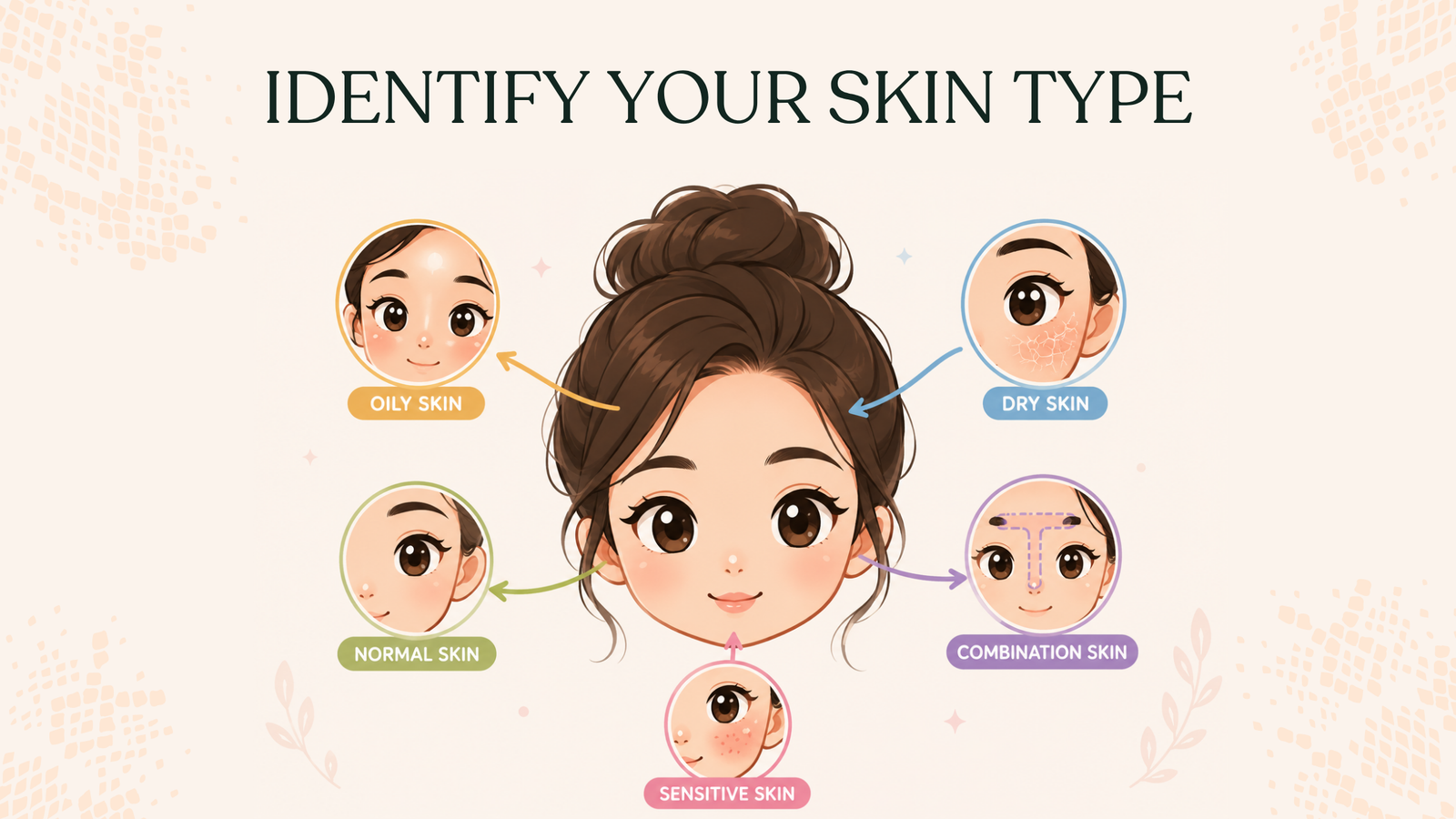
The Five Main Skin Types
Most people generally fall into one of these categories:
- Normal skin
- Oily skin
- Dry skin
- Combination skin
- Sensitive skin
Let’s look at each one.
1. Oily Skin
If your face often looks shiny or greasy, especially around your forehead, nose and cheeks, you may have oily skin.
You may also notice:
* Enlarged-looking pores
* Frequent blackheads or clogged pores
* More frequent breakouts
* Makeup becoming oily or sliding off during the day
* Your face becoming noticeably shiny a few hours after washing
Pakistan’s hot and humid weather can make oily skin feel even more noticeable. A common mistake with oily skin
Many people think;
“My skin is oily, so I shouldn’t use moisturizer.”
That’s not necessarily true. Oily skin still needs hydration. Instead of avoiding moisturizer completely, look for a lightweight formula that feels comfortable and doesn’t leave your skin feeling heavy.
Another common mistake is washing your face repeatedly throughout the day to remove oil. Your skin doesn’t need to be completely oil-free. A gentle cleanser used appropriately is usually a better choice than constantly scrubbing or washing your face.
2. Dry Skin
Dry skin usually doesn’t produce enough natural oil. You may notice;
* Tightness after washing your face
* Flaking or rough patches
* A dull appearance
* Fine lines looking more noticeable when your skin is dry
* Makeup settling into dry areas
* Your skin feeling uncomfortable after cleansing
Dry skin can become particularly uncomfortable during colder months, but it can also happen in Pakistan during hot weather especially if you’re spending a lot of time in air conditioning or using harsh skincare products.
What does dry skin usually need?
Dry skin generally benefits from gentle cleansing and good moisturization. Look for products that help keep water in the skin and support the skin barrier.
And remember: if your face feels extremely tight after cleansing, that isn’t necessarily a sign that your cleanser is “working well.” Your skin should feel clean, not stripped.
3. Combination Skin
Combination skin is exactly what it sounds like: a combination of different skin behaviours.
Usually, the T-zone, the forehead, nose and chin produces more oil, while the cheeks may feel normal or dry.
You might notice:
* An oily forehead and nose
* Dry or normal cheeks
* Occasional breakouts in the T-zone
* Different parts of your face needing different levels of hydration
This can be especially confusing in Pakistan’s summer because the oily areas may become much more noticeable.
What should you do if you have combination skin?
You don’t necessarily need completely different products for every part of your face. Start with gentle, balanced products and pay attention to how your skin responds. A lightweight moisturizer can often work well, while you can adjust other products depending on which areas of your face need more or less hydration.
4. Normal Skin
Normal skin is generally well-balanced. It isn’t excessively oily or excessively dry.
You may notice:
* Relatively balanced oil production
* Few breakouts
* Minimal sensitivity
* Smooth-looking texture
* Skin that generally feels comfortable after cleansing
But “normal” doesn’t mean your skin will never change. Your skin can behave differently because of weather, age, stress, hormones, diet, medications, or changes in your routine. Someone with normal skin can still experience acne, pigmentation or dehydration. So don’t stop paying attention to your skin just because it is generally balanced.
5. Sensitive Skin
Sensitive skin can be a little different from the other categories.
People with sensitive skin may notice that their skin reacts easily to certain products or environmental factors.
Possible signs include:
* Redness
* Stinging or burning
* Itching
* Irritation after using new products
* Feeling uncomfortable after cleansing
* Skin reacting to fragrances or certain ingredients
Hot weather, sweating, sun exposure and pollution may also make sensitive skin feel more uncomfortable. If you think you have sensitive skin;
Don’t introduce several new products at once.
Try one new product at a time and give yourself a chance to see how your skin reacts. Patch testing can also be helpful, particularly if you’ve experienced reactions to skincare products before.
If you experience significant swelling, severe irritation, blistering, or a persistent rash, stop using the product and seek medical advice.
A Simple At-Home Skin Type Test
Not sure which category you fall into? Try this simple test.
Step 1: Wash your face
Use a gentle cleanser and rinse your face with normal or lukewarm water.
Don’t scrub aggressively.
Step 2: Don’t apply anything
After washing, don’t immediately apply moisturizer, serum, sunscreen or other skincare products.
Step 3: Wait
Leave your skin alone for around 30–60 minutes. Try to do this when you’re indoors and away from extreme heat or direct sunlight.
Step 4: Look and feel
Ask yourself: Does my entire face feel tight or flaky? You may have dry skin.
Does my entire face look shiny or oily?
You may have oily skin.
Is my T-zone oily but my cheeks feel normal or dry?
You may have combination skin?
Does your skin feel comfortable without being especially oily or dry?
You may have normal skin.
If your skin becomes red, itchy, stings or feels uncomfortable easily, you may also have sensitive skin.
Remember that this is only a simple way to understand your skin. Your skin can change, and persistent or severe skin problems are best assessed by a dermatologist.
Skin Type vs. Dehydrated Skin
Here’s something that confuses a lot of people:
- Dry skin and dehydrated skin aren’t exactly the same.
- Dry skin is generally a skin type.
- Dehydration means your skin doesn’t have enough water.
That means someone with oily skin can still have dehydrated skin. For example, you might have a shiny face but still feel tightness after washing. This is one reason why simply looking at how oily your face is doesn’t always tell the whole story.
If your skin feels both oily and tight, don’t immediately assume you need stronger products to remove the oil. Your skin may actually need more hydration and a gentler routine.
Does Your Skin Type Change?
Yes, it can.
Your skin isn’t permanently locked into one category.
Things that can affect how your skin behaves include:
- Weather
- Age
- Hormonal changes
- Stress
- Skincare products
- Medications
- Lifestyle
- Sun exposure
- Changes in your environment
For example, you may notice more oil during a hot Pakistani summer and more dryness during winter.
That’s completely normal.
Instead of forcing your skin into one category forever, pay attention to what it’s doing right now.
How to Choose Skincare Based on Your Skin Type?
Once you’ve identified your skin type, choosing products becomes much easier.
If you have oily skin
Look for lightweight, comfortable products and avoid unnecessarily heavy formulas.
If you have dry skin
Focus on gentle cleansing and products that provide lasting hydration and support your skin barrier.
If you have combination skin
Look for balanced products and pay attention to how different areas of your face respond.
If you have normal skin
You have more flexibility, but there’s still no reason to overload your routine with unnecessary products.
If you have sensitive skin
Keep your routine simple and introduce new products slowly. Look for gentle formulas that your skin tolerates well.
But remember;
Skin type is only the beginning. Your acne, pigmentation, dehydration or other concerns will also influence which ingredients and products make sense for you.
Don’t Let Social Media Choose Your Skin Type
We’ve all seen those skincare videos: “If you have oily skin, buy this.”
“If you have dry skin, you need this.”
“Everyone needs this Korean serum.”
It’s easy to get caught up in trends. But skincare isn’t one-size-fits-all. The product that works perfectly for your friend may not work for you. Even two people with oily skin can have completely different needs.
Instead of asking:
“What’s the most popular Korean skincare product?”
Try asking:
“What does my skin actually need?”
That’s a much better place to start.
How Korean Home Can Help?
If you’re still unsure about your skin type or don’t know where to begin, you don’t have to figure everything out alone. At Korean Home, we offer personalized skincare consultations and routine recommendations.
You can tell us about your skin, your main concerns and the products you’re currently using, and we’ll help you understand which products may fit into your routine. We believe skincare should be about buying what you need, not buying as many products as possible.
Final Thoughts
Understanding your skin type isn’t complicated. Take some time to observe your skin. Notice how it behaves after cleansing, throughout the day, and during different seasons.
If your face gets shiny quickly, you may have oily skin. If it often feels tight or flaky, you may have dry skin. If your T-zone is oily while your cheeks are drier, you may have combination skin. And if your skin reacts easily to products or environmental changes, you may have sensitive skin.
But don’t worry if your skin doesn’t fit perfectly into one category.
Your skin is unique, and it can change over time. The goal isn’t to find a perfect label. The goal is to understand your skin well enough to give it the care it needs.
And once you know your skin type, you’re already one step closer to building a skincare routine that actually makes sense for you.
Frequently Asked Questions
How can I find out my skin type at home?
Wash your face with a gentle cleanser, don’t apply skincare afterward, and observe your skin after about 30–60 minutes. Look for signs of oiliness, dryness, or a combination of both.
Can oily skin also be dehydrated?
Yes. Oily skin describes oil production, while dehydration refers to a lack of water in the skin. You can have oily but dehydrated skin.
Does Pakistani weather affect skin type?
Weather can affect how your skin behaves. Heat and humidity may make oiliness more noticeable, while air conditioning and colder weather can make some people’s skin feel drier.
Can my skin type change?
Yes. Age, hormones, weather, stress, products and other factors can change how your skin behaves.
Is sensitive skin the same as dry skin?
No. Sensitive skin refers to skin that reacts easily, while dry skin generally means the skin produces less natural oil. You can have dry, oily, combination or normal skin that is also sensitive.
Do I need different skincare products for different seasons?
Not necessarily. You may find that your skin needs more or less hydration depending on the weather, but you don’t automatically need to replace your entire routine every season.
What’s the most important thing after identifying my skin type?
Understand your main skin concerns. Your skin type tells you how your skin behaves, while your concerns—such as acne, pigmentation or dehydration—help determine what type of products you may need.
Still Not Sure About Your Skin Type?
That’s completely okay.
Skincare shouldn’t feel like an exam. If you’re confused about your skin type or don’t know which Korean skincare products are right for you, Korean Home offers personalized skincare guidance to help you find a routine that fits your skin and your needs.